
India's macroeconomic environment is improving, but it is still not past the point where it can ignore the developments in the global markets

'When I came here in 2002, I said you can grow at 8%.' 'And I was told that was crazy, and (now) here we are.'

'I know of at least one techie who quit his job to join the AAP in Delhi. Many others traveled to India to volunteer during the election. If you ask these volunteers why they were doing it when they can't even vote in India, they say, "We want a corruption-free India".' Ritu Jha looks back on the year that was; it was party time, she says, for news junkies like her.

The Rupee is seen strengthening against the dollar.

Money is being released and the government knows it will have to front-run private investment.

In putting the country's economy back on the rails, it is best that Narendra Modi and Arun Jaitley draw on grass-roots feedback and their own practical sense and native wisdom without allowing themselves to be sucked into the quicksand of economic punditry, says B S Raghavan.
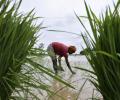
Chief economic advisor Arvind Subramanian discusses the Budget, goods and services tax, Centre-state relationship and larger issues facing the economy

The second half of June could be driven more or less by technical factors triggered by news flow from Greece, the US Federal Reserve and the monsoon. The technical picture seems bearish as of now, says Devangshu Datta.

But experts say downside limited, pockets of opportunities for investors

'No finance minister has the capacity to put the economy in an ICCU just like no finance minister has the capacity to take it for 10% growth!'
The hype surrounding the Budget gives it undue importance.
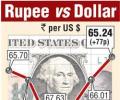
After hitting a record low of 68.85 to the dollar last week, a Reuters poll suggests the rupee will stabilise at 66 to the dollar by the end of September, while technical charts also point to a period of relative calm.

Growth in India will pick up from current levels, says LEO Puri, managing mirector, UTI Asset Management Company.

We are in this mess as the machinery of the government in a market economy is broken. We need technically sound banking regulation, so that capital is not misallocated, and the landscape does not get littered with zombie firms kept alive through evergreening, says Ajay Shah.
.jpg)
The minister also promised more policy decisions in the coming days saying 'reforms is a work in progress'.

Finance firms in these SEZs likely to get tax breaks.

Rate-sensitive sectors like banks, realty and auto witnessed heavy selling pressure ahead of the RBI Monetary policy which is scheduled on September 29.

Global investor and author Jim Rogers, who recently sold his India investments, talks about his disappointment with Prime Minister Narendra Modi's economic reforms, why he is betting big on the US dollar and the Chinese Renminbi and what will bring him back to India some day.

In the near term, the key driver will still be the government's fiscal spending.

Although the current long-term bullish trend is intact, markets are awaiting clarity on the taper and the Assembly election results.

Soon after the BJP lost the 2004 election, the stockmarkets went into unprecedented free fall. Then SEBI Chairman G N Bajpai reveals how his firm handling of the situation restored confidence and soon the markets were back to doing what they do best -- make money. A revealing excerpt from his book, A Game Changer's Memoir.

'The number of first-time investors into MFs can grow four times more than the current rate if we are able to accept the bank KYCs.'
Experts have started giving comments on provisions that the govt must make in Budget 2016-17.
The 30-share Sensex and the 50-share Nifty ended flat at the mark of 27,403 and 8,248 respectively.

The full transcript of the exclusive interview with Prime Minister Narendra Modi.

Under the scheme coming into effect from April 1, 2018, a donor could purchase bonds from authorised banks against cheques or digital payments. These would be redeemed only in the designated account of a registered political party.

The country must get its act on global alliances right in order to feed its fuel-hungry economy, points out Subhomoy Bhattacharjee.

Going ahead, the likely implementation of the goods and services tax bill in July and how the monsoons play out will have a bearing on India's demand for gold and gold jewellery

The global economy may just be entering a new phase.

There will very little direct impact from the US Fed's rate hike this time, as we are well prepared both to handle liquidity, outflow of FII funds and managing our currency. But that doesn't mean India will be out of the woods anytime soon, says M V Subramanian.
.jpg)
The catalyst is the run on emerging market equities, but many investors are just tired of waiting for India to get its act together.

Over the past week, the Sensex and the Nifty continued the bull-run

'India is the largest stomping ground in the world for impact investing as we have an extraordinary combination of entrepreneurial drive with huge, absolute demand for all kinds of social services,' IDFC First Bank's chief Rajiv Lall tells Anjuli Bhargava.

The prime minister's August 15 address was undoubtedly inspirational and outlined important economic and social objectives, such as making India a global hub for manufacturing, ensuring bank accounts for all poor families, major thrusts in sanitation and cleanliness, and a radical restructuring of the Planning Commission.
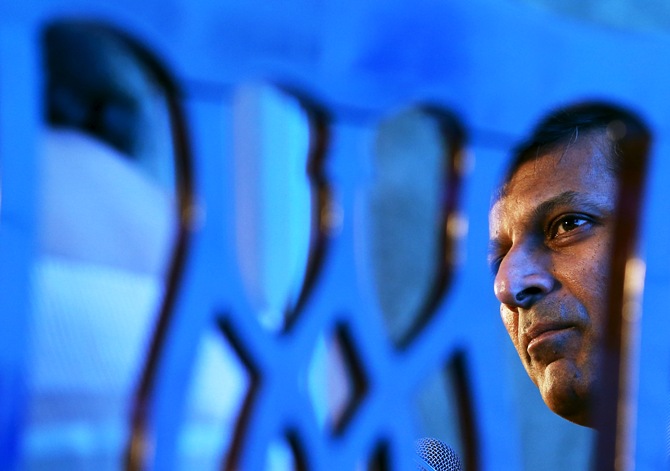
The RBI Governor brought down retail inflation to 3.8% in July.
'There is no change in the overall story of economic recovery.'
S Naren, CIO of ICICI Prudential Mutual Fund, in an interview with Chandan Kishore Kant, says cyclicals will offer good value.

As the Modi government enters the fourth year of its tenure, it is looking more confident, shedding its earlier inhibitions about offering sops or new opportunities to big business, says A K Bhattacharya.

Market experts poohpooh fears of capital flight from India.
It will be difficult for the Indian equity to outperform overall growth to the extent bullish observers expect.
